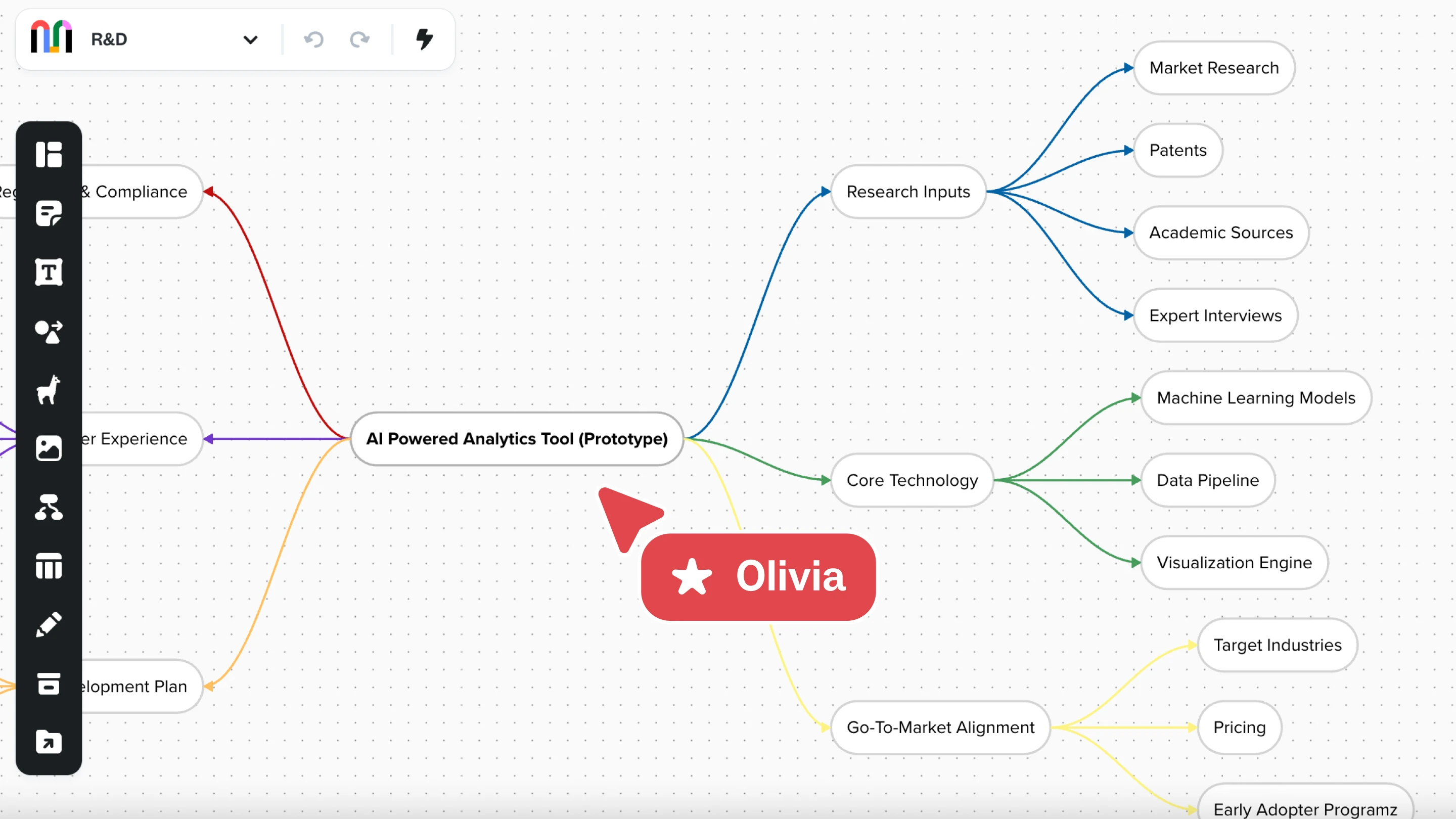
If you’re a product manager, UX researcher, or engineer, you know the path from raw product research data to a successful release always seems to take longer than it should. But the bottleneck is rarely the research itself, it’s usually the time it takes to synthesize findings, align stakeholders on what matters, and translate priorities into work that engineering can actually do something with.
Maybe you’ve waited weeks for research synthesis before a sprint could start, or you have seen engineering lose time to low-priority features because the right insights came in too late. These aren’t edge cases, they’re the default when product research lives in spreadsheets and static reports that were never designed for cross-functional decision-making.
AI for product research kicks “default” to the curb, and with Mural AI, teams can cluster feedback, summarize patterns, and translate insights across languages, all inside a shared visual workspace. What happens is weeks of manual processing compresses into minutes, and you get research that’s accessible to every stakeholder so your team can move from discovery to roadmap decisions faster, without sacrificing quality.
The hidden costs of manual product research and synthesis
Your current process might feel like it’s humming along smoothly, until you step back and measure the impact.
Sprint timelines go out the window when UX researchers spend days manually coding interview data before anyone else can act on it. Product teams push the wrong priorities; their misinterpretation of static research documents leads them toward low-priority work. And backlogs churn when new findings emerge mid-sprint and shift the team's focus, because the original synthesis was too slow to capture what actually mattered.
Dense spreadsheets and long reports are a huge part of the problem. They slow analysis and make stakeholder alignment harder. Product managers end up translating static findings into backlog items one by one, wasting time that could be spent on roadmap priorities. For VPs and Directors of Engineering, this friction is an enormous drag on delivery timelines that compounds across every sprint.
Unlocking product research efficiency with Mural AI
For R&D teams, one of the slowest steps in the product cycle is making sense of all that qualitative data, from sticky notes and interview transcripts to usability tests and survey results.
With Mural AI, product managers, researchers, and designers can skip manual sorting and surface insights in minutes. Right inside the canvas, teams can organize usability findings or customer feedback by theme using AI-powered clustering, instantly grouping sticky notes so recurring issues are clear to the whole team. Recent updates like custom title preservation mean your cluster labels stay exactly as you wrote them, and Preview Mode lets you evaluate AI-generated groupings before committing them to the canvas.
Mural AI also summarizes discovery session results, reducing the amount of time spent by researchers translating raw notes into a concise set of key takeaways for faster alignment before sprint planning. And with sentiment classification, teams can tag qualitative feedback as positive, negative, or neutral to quickly gauge customer reactions to features or changes.
Together, these capabilities keep analysis and action in the same workspace, reducing handoff delays and helping teams turn user insights into sprint priorities faster.
Four R&D scenarios: From research to roadmap in hours
We’ve included a few scenarios below that show how product research used to work and how Mural AI helps teams compress research synthesis and move from findings to roadmap decisions faster.
1. Synthesizing user feedback after a beta launch
The old approach meant weeks spent coding survey data and producing dense PDFs that few people (re: nobody) had time to read. By the time findings reached the team, the window for fast iteration had already become slim.
With Mural AI, teams can group feedback by pain point in minutes. Insights and supporting quotes are shared with engineering on a mural where engineering can adjust sprint tasks immediately and marketing can update messaging before release day. See how Mural supports the full research and analysis workflow.
2. AI-powered competitive analysis during a redesign
Typically you see competitive findings end up scattered across spreadsheets and slide decks, which means multiple alignment meetings before anyone agrees on what they mean for the product.
Working visually in Mural, teams can let Mural AI summarize competitor insights simplifying the process to map them against redesign goals and priorities. Engineering gets clear acceptance criteria, and scope creep becomes easier to spot and contain. For teams building products in highly competitive spaces, AI-powered mind mapping can help explore competitive angles and solution paths faster than static documents allow.
3. Post-launch research synthesis for roadmap adjustments
After a launch, metrics and qualitative notes often end up in different places, which delays V2 planning and makes it hard to connect user sentiment to roadmap decisions.
When these notes and KPIs are tracked in Mural, Mural AI can synthesize interview themes while the team maps adoption trends on a shared mural in the same session. Hypothesis testing happens alongside the data, and V2 experiments can start within days rather than weeks. This is where optimized R&D workflows make the difference between insights that sit idle and insights that shape the next release.
4. Multi-market discovery across distributed teams
When R&D teams span multiple countries, language barriers and timezone gaps make synthesis even tougher.
Mural AI’s translation capability converts sticky notes and research inputs into more than 50 languages. Combined with clustering and summarization, distributed teams can collaborate on research in real time regardless of where they are, keeping roadmap alignment on track across regions.
Accelerating roadmap alignment and product decisions
When AI-powered analysis feeds directly into a collaborative visual workspace, product teams can identify key themes, align priorities, and convert insights into backlog items in the same session. This supercharged workflow cuts decision cycles drastically, gets sprints started faster, and keeps projects on track from research through release.
There’s a reason why leading R&D organizations use visual collaboration as the backbone for product research analysis and decision-making. They know that their teams align sooner, reduce friction, and turn insights into sprint-ready priorities at high velocity. See how visual collaboration powers open innovation in R&D.
Visual collaboration: Mural helps make insights clear and actionable
Mural creates a shared source of truth across R&D, engineering, and GTM teams, where live annotation, prioritization, and brainstorming happen in context rather than in separate tools. When insights are visible to everyone at once, decisions happen faster because nobody is waiting for a report or a handoff. Explore how R&D teams use Mural to integrate visual collaboration seamlessly into their workflows.
Beyond spreadsheets: AI for research-to-roadmap workflows
The future of product research (we’d argue it’s the present) is about compressing the time between what you learn and what you build. R&D teams that figure this out and close this gap are the ones that will consistently ship the right products on time.
Mural AI gives your team the tools to move from research to roadmap without weeks of manual synthesis. Cluster findings into themes. Summarize patterns into priorities. Translate global insights so nothing is lost. And do it all in a shared visual workspace where stakeholders can see, react to, and align on what matters, in real time.
Whether you are an engineering manager trying to connect research to delivery, a UX research lead looking to get unstructured interview data in front of decision-makers faster, or a TPM coordinating across distributed teams, Mural helps you turn validated insights into aligned sprint priorities without friction.
Try Mural AI, or chat with our team to see how AI-powered research synthesis and visual collaboration can help your R&D organization move faster.